I mentioned to a friend that I was doing a couple of presentations at the STAV conference about using schema, mental frameworks, and collaborative learning. And being who my friend is, Ben Lawless of Lawless Learning, aka a wellspring of educational expertise, said, “You should do the Learning how to Learn Course by Barbara Oakley”. So I did. Over Summer, while turning the compost heap, I was watching the videos on how the brain encodes knowledge and how we maximise our effectiveness in learning. And what chaos has since ensured. It has completely turned my ideas inside out as to what I value in my classroom. I had long been pondering on how to help students get more out of their investment in Chemistry. Every year I have students who work slavishly through the textbook questions and trial exams, but with results which are below their expectations. I can now see some areas where they could make improvements in how they are learn. As the new year has begun, I am trialling strategies in my classroom to help students ‘level up’ in how they learn. Investing more in ensuring students are encoding a deep understanding of the concepts and explicitly teaching them how to do retrieval practice. I now have a million and one different ideas for the classroom, so much so, that I am developing a website purely for students. Ready made flashcards which I have incorporated into an app called LIFT (Lietner Interactive Flashcard Trainer). I have also developed the Triple D app, where students challenge each other to go deeper in their understanding. And similarly the Gold Bank, is for students to develop their skills in deeply encoding knowledge and learning how to write exam ready answers. Sadly the website is not quite ready, the start of the teaching year is always busier than I imagine, but when it is I will let you know.
Author: ahudson1005

A new study design – a new beginning
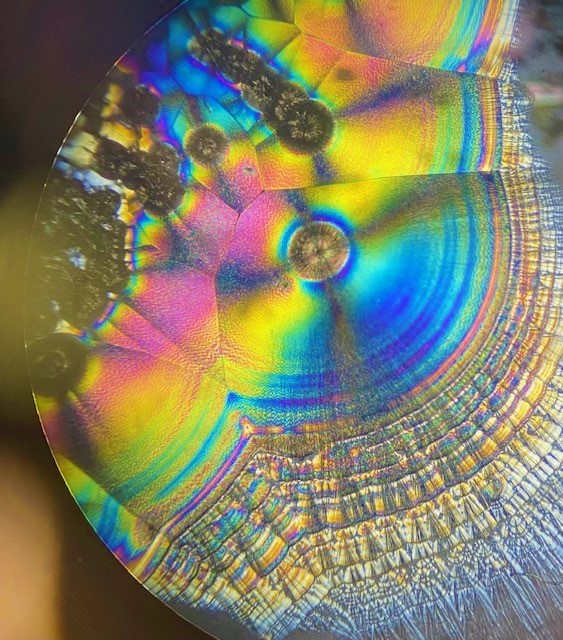
It has been refreshing to start the year with a new study design in Year 11 as it has been an opportunity to rethink how we teach the foundational concepts and the key science skills. We had noticed that our students were less confident in their practical skills as a result of missing many of the experiments they would have normally completed in Year 8 and 9. Skills such as filtering solutions, or setting up the digital temperature probes, normally practised many times in the lower year levels, are now being taught for the first time. So with this in mind we have designed an introduction assessment task which integrates the beginning concepts in Chemistry with making slow growth and fast growth crystals. And I have to say I am loving the more hands on approach to tackling some of the challenging concepts of periodic trends and intermolecular bonding. We are only taking our beginning steps in designing this project, but I look forward to sharing our ideas at a future conference. I leave you now with one of our first pictures of the birefringence of Vitamin C crystals; an image taken with a hack version of polarimetric microscopy at 400x magnification.
Essential topics in VCE Unit 1 &2 Chemistry
I recently presented at workshop at the STAV VCE Chemistry conference on essential topics in VCE Chemistry. Whilst the workshop was a mini disaster in that the mural app didn’t work as expected, I was still able to collect teacher perspectives by using the chat feature in zoom. I am pleased to say I was able to use this data to create an infographic which highlighted the essential topics. (See below for an image of the infographic and click here for a more detailed PDF). I have to say that whilst I thought I had a pretty good idea of which topics to focus on whilst teaching Unit 1 & 2 Chemistry, seeing the infographic has really clarified this for me. So much so, that I am going to rework our assessment tasks to provide a stronger foundation for students in Units 3 & 4. Click here if you would like to contribute to the infographic on essential topics in Unit 3& 4 Chemistry. The questionnaire took me around 5 minutes to complete. Once there is a reasonable quorum of votes, I will again collate the data and post the infographic.

Transcending
Why do we teach Chemistry? We are all unique, but I am pretty sure many Chemistry teachers keep going back to the classroom for the simple reason that they love it. Today I was teaching the Periodic table to another group of Year 11 students. I have lost count of how many times I have taught this concept, but I am still amazed by the brilliance of Mendeleev and his intuition in knowing there was a ‘gap’ and his ability to predict the properties of the element that would fill the gap. This is the beauty hidden in the wonders of the atom. That despite their complexity, atoms still follow wonderfully simple patterns. And it is this wonder that we are passing onto our students. It is a joyous moment when I see students move from this idea that they are learning facts to discovering they are unlocking the hidden mysteries of the universe. As my fellow Chemistry teacher shared the other day….”They are transcending.”
Finding inspiration
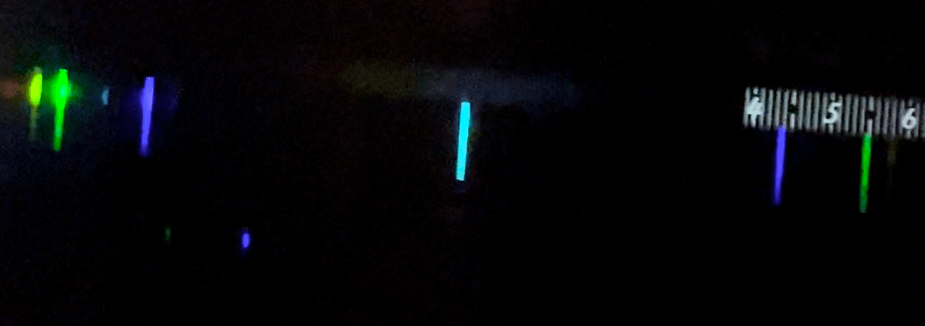
Last year was a year like no other and this year is proving to also have it’s challenges. Looking back I can see that I gained a great deal of new skills. Some useful for a life back in the classroom, others not so. But after spending a few more days in lockdown, what is obvious is that science teachers have become increasingly flexible. I have found that with all my classes in OneNote this has given me the opportunity to quickly adapt to where I need to be teaching next. Students also have become more adaptable, quickly finding ways to communicate with others and stay up to date. Whilst I appreciate this new paradigm, nothing beats being in the classroom. I was able to do the Flame Test experiments with my students just before lockdown. And what a delight it was. There is nothing better than using spectroscopes to capture emission spectra in real time….
So many possibilities…
I am constantly looking at how I can change what I do to make learning more effective for students. VCE Chemistry is a subject of many challenges where time continues to be the limiting factor. Students learn numerous concepts and processes within a tight schedule all the while balancing their other VCE subjects and out of school commitments. So it is crucial that we streamline and remove distractions so students can focus on the ideas that count. I have found that reducing my teacher talk time through the use of study groups in the classroom fosters in students an independence and connections that can fast track their learning. It has also given me an opportunity to develop differentiated learning opportunities in the classroom. These strategies have been working for me but this is a new year with a new group of students. I can’t wait to see what new ideas are waiting to be born.
Ignite student learning
I love learning, I love creating and I love to ignite in students a desire to learn. Curiosity is a wondrous thing and when it gets inside of you, it will spur you on to go further and try harder than you ever thought was possible. During my PhD I experienced the wonder of discovering new ideas and new theories and it is this same wonder that I love seeing birthed in students during their practical investigations. It is a remarkable moment shared when you are privy to a discovery that they have made in the humble secondary school laboratory. This year at the VCE Conference I am sharing about all things AOS3. It has become a passion of mine talking about the benefits of allowing students the room and time to investigate their own unique project. Benefits that are reflected in their exam results, but even more importantly are reflected in igniting that spark to continue learning well beyond their days in school and university.
Apple seeds grow apple trees
There is a lot that we as educators can learn from other professions. Horticulturalists know that if you want to grow an apple tree then you need to plant an apple seed and financial advisors will say you need to invest wisely if you want high returns. So if we want students to be able to think, question, create and have self belief then we need to plant the right seeds, and if we want to see high returns for our investment then we need to use ‘time’, our most precious commodity in education, wisely.
Our science faculty had always felt that we were planting the right type of seeds and investing our time wisely. However, analysis of our curriculum found that we were planting seeds that were predominantly about remembering and understanding content. Two things came along to disrupt this, firstly, our school moved to developmental skills based assessment and secondly, practical investigations became a major component in senior science.
The timing of these changes were ideal in that we were able to develop a skills based developmental rubrics for practical and research investigations which is consistent across all the sciences and from primary to senior school science.
Moving to a skills based assessment has really revolutionized everything that we do because we now give focus to the ‘how’ rather than the ‘what’. Open investigations are now core to our teaching program and with over 600 practical investigations and more than 1000 research investigations it makes for a very busy faculty. But we are already starting to see some pleasing returns. We have found that students have made a significant improvement in their ability to answer higher order thinking questions (effect size of 0.80) and students are more engaged, consistently listing ‘science’ as one of their favorite subjects. The last two years has been ‘big’ in terms of all the changes that we have made – but I wouldn’t have it any other way. I can’t wait to see our ‘tree’ when it is fully grown as our investment is already starting to pay dividends.
Building self-belief
I had recently taken up learning french after a friend offered to run classes once a week during lunchtime. I had heard about duo lingo so I signed up and soon found that I was on a five day streak- it seemed that nothing could stop me. That was until my next french lesson. There was talk about how the french you learn in duo lingo wasn’t very useful in France. I walked out of that lesson a changed person. I was no longer inspired. It was like any belief that I could learn to speak the french language was gone. Since that day I have not completed another duo lingo session. Everyday I get notifications but I have not had any inclination to make time to complete a 5 minute session. On reflection it showed me just how tenuous the idea of success can be for our students. A poor mark in an assessment task, feelings of confusion in class or even students discussing about how hard the subject is, can all lead to a student believing that they will not be able to reach their goals. It is well known that self-belief in a subject is strongly connected to achievement. So the question is, ‘How do we help students achieve when they have missed some of the foundations in the year before or they find the content material challenging?’ This is where differentiation comes in, that is setting goals that each students can reach for and find success. I have been trying a range of strategies in my classes over the past few years; using study groups, setting up individual homework plans, identifying areas where students need extra support and then running targeted sessions during class – and it has been really satisfying to see students who have struggled in their learning find a new confidence in class. So can I be successful in learning french? Of course I can. I am just two duo lingo sessions away from getting my next two day streak.
Exploring the unknown
I completed a PhD because I really enjoyed exploring the unknown. The joy that comes when after months of experiments, a little mystery has been solved, can only be understood by those who have been there. Of course this usually resulted in more questions than answers so off you would go again, designing experiments in search of the experimental finding that would make everything just fall into place. In the middle of even the darkest days when there was yet again another failure, there was always this sense of anticipation that something amazing was about to happen. Teaching differs in many ways from research, but for me it shares the same sense of exploring the unknown. Each year there are new students who enter the classroom, each with their own unique ways of thinking and interests. The first weeks of classes remind me of the start of a research project when everything is a little blurry and you are trying to put together your research question. Likewise in the classroom, I am struggling to remember students names and get to know who they are. But as the weeks progress and the students begin to express their thoughts and ideas, things start to get a little more visible. And as in research where the question becomes more and more fascinating as times goes on, understanding what inspires and challenges each student becomes increasingly absorbing. Each new lesson plan is like another experimental design where there are expected outcomes and the eventual reality on the other side. So to the classroom I continue to go, testing my questions and updating my hypotheses -on an intriguing journey, exploring the unknown.
 mychemhub